Resources
Interview Tips
How to record a story — in writing, in audio, or on video, and always on your own terms.
Start Here
Your Story, Your Way
If you or your family came to West Virginia from another country, we invite you to share your story. You do not need special equipment, training, or experience. A phone and a quiet room are enough.
You Are in Control
- You may share anonymously. We accept stories with no name at all, with a first name only, with initials, or with a made-up name you choose. Just tell us on the information sheet how you would like to be credited.
- You may share your voice without your face. An audio recording is every bit as valuable to the archive as a video.
- You may skip any question. There is no required list. “I would rather not answer” and “let’s stop” are always fine.
- You may set limits. For example: keep this in the archive but not on social media; do not use my last name; keep this closed to researchers for ten years. Write your limits on the information sheet and we will follow them.
- Decide before you send. The permissions you mark on your information sheet are the ones we work from. Once a story has been published, copies may already exist beyond our control, so please take the time you need before submitting.
Before You Record
Safety First
Nothing in this archive is worth putting a person at risk. Please read this part before you begin.
Immigration status can carry real legal consequences. A story can be complete, moving, and true without containing the details that create risk. Before you record, consider leaving out:
- Alien registration numbers, case numbers, or court dates
- Specific dates, routes, or methods of entry
- Names of people who are still traveling, still waiting on a case, or still in danger
- Names of employers, landlords, or coworkers who have not agreed to be named
- Your street address — or video that clearly shows your house number
If any part of your story touches your own immigration case, speak with an immigration attorney or a free legal aid organization before you record it.
Before You Press Record
- Turn off location tagging in your phone’s camera settings before you record. Phones commonly save GPS coordinates inside photo and video files.
- Everyone who can be seen or heard must agree to be recorded.
- No minors. For their safety and for legal reasons, no children under the age of 18 should appear in any video or image you submit.
- Record where you feel safe — a home, a church, a library study room, a friend’s kitchen. Comfort matters more than production quality.
Choose a Format
Three Ways to Share
Pick whichever is most comfortable. All three are equally welcome, and all three belong in the archive.
Write in whatever language you think in. One page or twenty pages — both are useful. Write it straight through, answer the questions below, or write it as a letter to someone in the future. You can paste photographs into the document with a caption saying what each one is.
Use the voice recorder already on your phone, then export or convert the file to .mp3. Twenty minutes makes a good story. An hour makes a wonderful one. No camera, no lights, no one has to see you.
Any phone made in the last several years is more than good enough. Hold it horizontally, put it on something steady, and see the recording tips further down this page.
Our upload folder accepts .mp4, .mp3, and .docx files only. If what you have is a song, a scan, a photo album, a recipe, or a piece of artwork, write to us before you upload. We cannot accept every format, but it is worth asking.
Prompts
Questions to Get a Story Going
The goal is not an interview. The goal is for a person to tell their own story, in their own order, in their own words. Use three of these or thirty. Skip anything that does not fit.
Getting Started
Easy questions first, while everyone settles in.
- Tell me your name, where you were born, and where you live now.
- Where does your story begin?
Life Before
Ask for details you can see, hear, and smell.
- What was the place you came from like?
- Who raised you? What were they like?
- What is a day from your childhood you still remember clearly?
- What work did people in your family do?
Leaving
Follow the decision, not just the event.
- When did you first think about leaving? What made you decide?
- Who did you tell first? What did they say?
- What did you take with you? Is any of it still with you?
- What was the hardest part of leaving?
Arriving
First impressions make some of the best material.
- What is the first thing you remember about arriving in the United States?
- How did you end up in West Virginia, of all places?
- What surprised you here? What confused you?
- What was the first winter like?
- Who was the first person here who was kind to you? What did they do?
Building a Life
The ordinary business of making a home.
- What work have you done here? What was your first job?
- Tell me about learning English — or about the days you did not need it.
- How did you find a house, a car, a doctor, a school?
- What did you cook when you first got homesick? Where did you find the ingredients?
- Where do you worship, gather, or celebrate?
- What do you grow, make, or fix?
Family
Who came, who stayed, and what gets passed down.
- Who came with you, and who did you leave behind?
- How do you stay in touch with people back home?
- What do your children know about where you came from? What do you want them to know?
- What language do you speak at home?
- What is something your parents or grandparents said that you still repeat?
The Hard Parts
Offer these gently. Let them pass without a second try.
- Was there a time you thought about going back?
- Have you ever felt unwelcome here? What happened?
- What do people here get wrong about you or your community?
- What have you lost by coming here?
West Virginia
The heart of this archive.
- What do you love about this place?
- When did West Virginia start to feel like home — or has it?
- Do you feel like a West Virginian? What does that word mean to you?
- What do West Virginians and the people where you come from have in common?
Closing
Always ask the last one.
- What do you want people who hear this in a hundred years to know?
- What advice would you give someone who arrived last week?
- Is there anything I should have asked you and did not?
How to Ask
- Ask one question at a time — then stop talking.
- Let silences sit. People often begin the real answer after three or four seconds of quiet. Do not fill the gap.
- Ask open questions. “What was that like?” gets a story. “Was that hard?” gets a yes.
- Follow the details. When someone mentions a room, a song, a bus, a name — ask them to describe it.
- Do not correct, argue, or finish sentences. Even if you know the history better, this is their account.
- Do not interrupt to fix equipment. Wait for a natural pause.
- Leave the recorder running for a minute after you think you are finished. The last thing people say is often the best thing they say.
Technical Tips
Making a Good Recording
None of this is required. A story recorded badly is far better than a story never recorded at all. But a few habits will make your recording last longer and sound better.
Sound Matters Most
You may be the fly on the wall, but audio will be the fly in the ointment. A grainy picture is forgivable; muddy sound is not. Whenever you can, run two devices recording audio at the same time — a phone and a laptop, two phones, anything. Batteries die and files corrupt. The backup recording has rescued more interviews than any other single habit.
- Test, then listen back. Record thirty seconds, play it with headphones, and only then begin.
- Watch your levels. If your app shows an audio meter, leave headroom — people get much louder when they laugh or when the story turns emotional. Blowing out the microphone is never good.
- Kill the room noise. Turn off the air conditioner, the fan, and if you can, the refrigerator. Close the windows. Put both devices in airplane mode.
- Choose a soft room. Rugs, curtains, couches, and bookshelves sound far better than kitchens and empty rooms.
- Get close. Keep the microphone within a foot or two of the speaker. An inexpensive clip-on lavalier microphone is the single best piece of equipment you can buy.
If You Are Shooting Video
- Hold the phone horizontally, resting on something steady — a tripod, a stack of books, a windowsill.
- Put the light in front of them, not behind them. Never seat someone in front of a bright window. A window off to one side, lighting the face at an angle, is beautiful and free.
- Keep the camera at eye level. Place the narrator’s eyes about a third of the way down the frame. A camera looking up at someone lends them power; a camera looking down on them takes it away. For these stories, level and equal is almost always right.
- Lock focus and exposure by tapping and holding on the face, so the picture does not pulse while they speak.
- 1080p is plenty. Higher resolutions eat storage and upload time for no real gain.
- If you record more than one person, change something — a different room, a different angle, a different light. Interviews framed identically start to look like a filing cabinet instead of a group of people.
Shoot the Ordinary Days
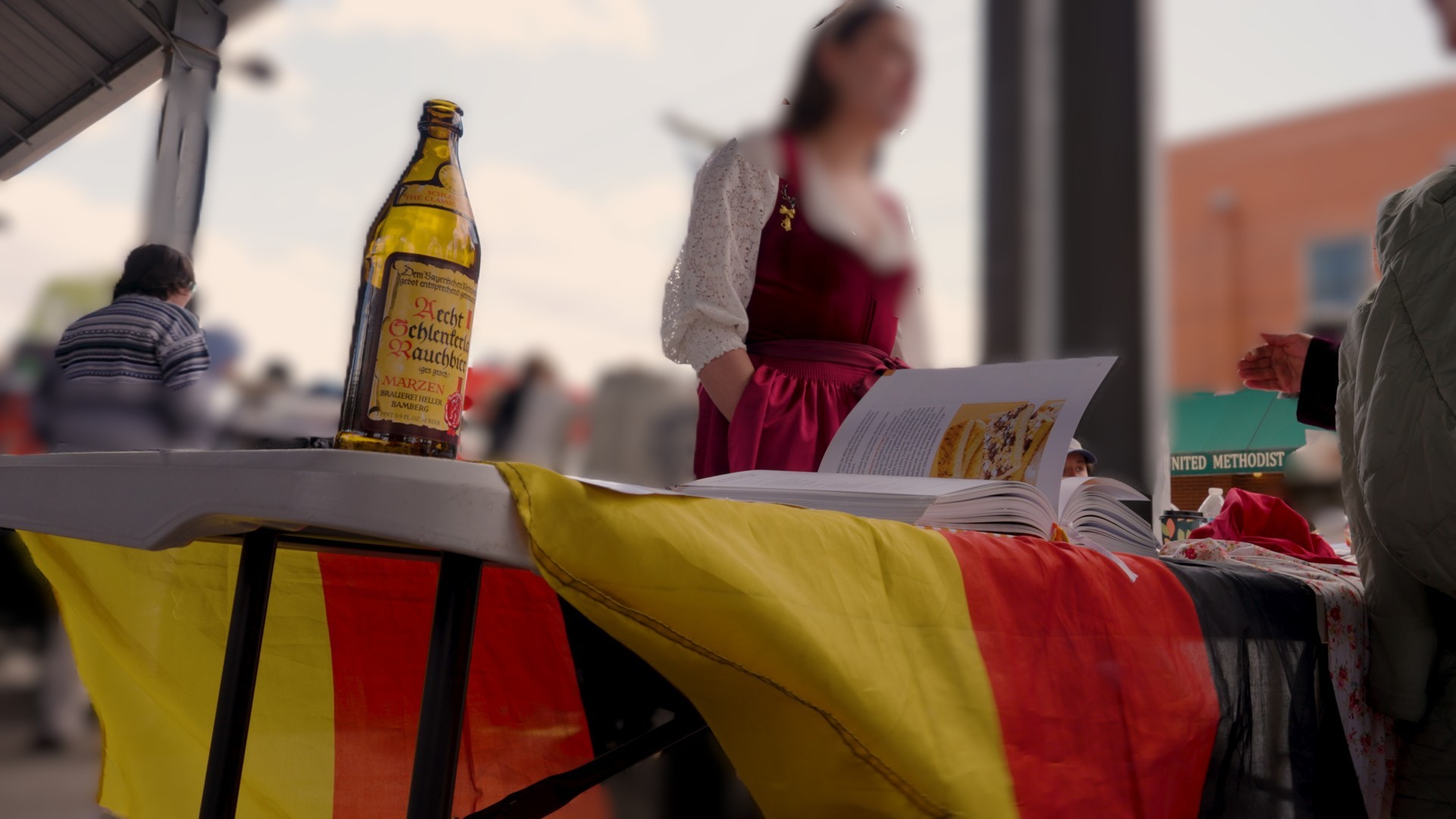
Do not underestimate the value of what filmmakers call B-roll. Hands cooking. A garden. A drive down the road. A shop, a workbench, a church, a photo album, the shoes by the door. These quiet images are archives in themselves, and they are what makes a finished story feel like a life rather than a transcript. The quotidian rhythms of a place are exactly what we are trying to preserve.
You Are Not Alone
Ask around before you start. Someone in your family or congregation may already have footage, cassettes, or photographs worth adding. If you want to attempt something more ambitious, look for experienced filmmakers, students, or photographers in your community — many will help for free or for very little. And if a project needs real resources, state humanities councils fund exactly this kind of work. The West Virginia Humanities Council is a good first knock on the door.
Send This With Your Story
The Information Sheet
Every story needs a little context, so that someone fifty years from now knows what they are listening to. Copy the block below into a document, fill in whatever you are willing to fill in, and leave the rest blank.
Spoken Consent
Read something like this at the beginning of an audio or video recording:
“My name is [name, or the name you have chosen]. Today is [date]. We are recording in [town]. I am sharing this story with the West Virginia Immigrant Voices Project, and I agree that it may be preserved in their archive and shared publicly, except for anything I ask them to leave out.”
Say the same information out loud at the very start of your recording instead. That is a normal and fully accepted practice in oral history.
Four Steps
How to Submit
- Name your file so we can identify it: LastNameOrChosenName_Town_YYYY-MM-DD. For example: Nasser_Fairmont_2026-04-12.mp4
- Fill out the information sheet above, save it as a .docx with the same file name, and keep it with your story.
- Upload both files to the archive folder using the button below.
- Email us at changethenarrativewv[at]gmail.com so we know your submission has arrived.
The upload folder is hosted on Google Drive, and uploading may record the Google account you are signed in with. If that is a concern, do not upload while signed in to an account you would rather not associate with this project, and write to us before submitting to ask what other options are available.
Opens in Google Drive · .mp4, .mp3, and .docx files only, please.
Afterward
What Happens Next
Submissions are reviewed by the project team before anything is added to the archive. We work from the permissions and exclusions you marked on your information sheet. This is volunteer work, so review can take time, and not every submission can be published. If you have allowed public sharing, your story may appear on this website, on our YouTube channel, and in community events, exhibits, and classroom materials across the state.
Your story remains yours, and we will not knowingly share it in ways you did not allow. If your circumstances change, write to us: we will stop sharing the material ourselves wherever we still can. We cannot recall what has already been published, downloaded, or copied elsewhere, which is why the permissions you set before submitting matter so much.